
White Dust after Mud Jacking?
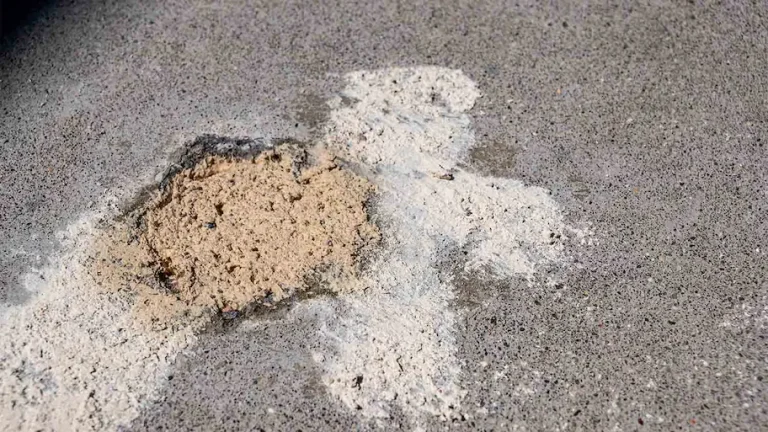
Do you have some white dust accumulating around the injection points after getting your concrete lifted? After a mud jacking repair, some property owners notice a fine white dust accumulating on the surface of their concrete. This residue is a natural byproduct of the mud jacking process and is caused by the alkaline nature of limestone slurry, the primary material used in eco-friendly mud jacking.
What Causes the White Dust?
Limestone is a highly alkaline material, meaning it has a high pH level, typically ranging between 9 and 10. When limestone comes into contact with moisture, a chemical reaction occurs, leading to the formation of calcium hydroxide. As water evaporates, the calcium hydroxide reacts with carbon dioxide in the air, forming calcium carbonate—a white, powdery substance that appears on the surface of the concrete. This is a harmless process similar to efflorescence, which occurs when water-soluble salts migrate to the surface and crystallize.
Is the White Dust Harmful?
No, the white dust is purely a cosmetic issue and does not impact the strength or stability of the concrete. It is non-toxic and will naturally wash away over time with rain or routine cleaning. However, if left unchecked, it can build up and create a chalky appearance on the concrete surface.
How to Remove White Dust from Concrete
Light Sweeping or Brushing – A simple broom or brush can remove loose dust from the surface.
Water Rinse – Spraying the area with a garden hose will help dissolve and wash away the residue.
Mild Vinegar Solution – If the dust persists, a diluted vinegar solution (one part vinegar to three parts water) can help neutralize and remove the buildup. The acetic acid in vinegar reacts with calcium carbonate, dissolving it into water-soluble compounds that rinse away easily.
Pressure Washing – For stubborn deposits, a low-pressure wash can be effective, but avoid using excessive pressure to prevent damage to the surface.
Carbonation Over Time – Naturally occurring carbonation will continue to convert calcium hydroxide into stable calcium carbonate, reducing the formation of new dust over time.
How Long Will the White Dust Last?
In most cases, the white dust will gradually diminish over a few months as the limestone slurry fully cures and the chemical reactions stabilize. Outdoor concrete surfaces exposed to rain and natural weathering tend to clear up more quickly. However, in covered areas such as garages, where there is minimal exposure to moisture, the dust may persist for up to a year before completely disappearing. Regardless, the process will eventually stop on its own as the material fully reacts and settles.
Will the White Dust Keep Coming Back?
The dust typically diminishes over time as the limestone slurry fully cures and stabilizes. If small amounts continue to appear, regular cleaning can manage the buildup until it naturally subsides. Over time, the chemical reactions slow down, and the concrete surface becomes more resistant to further dust accumulation.
Conclusion
The white dust seen after mud jacking is a normal and temporary occurrence caused by the alkaline nature of limestone slurry. Understanding the chemical reactions involved can help homeowners manage and mitigate its effects. While harmless, the dust can be easily controlled with simple cleaning methods. If you have concerns about post-mud jacking maintenance, consulting a professional can provide additional guidance on keeping your concrete looking its best.
Ready to get your concrete lifted?
We're happy to come take a look and give you a quote!
Get a QuoteExplore Costs